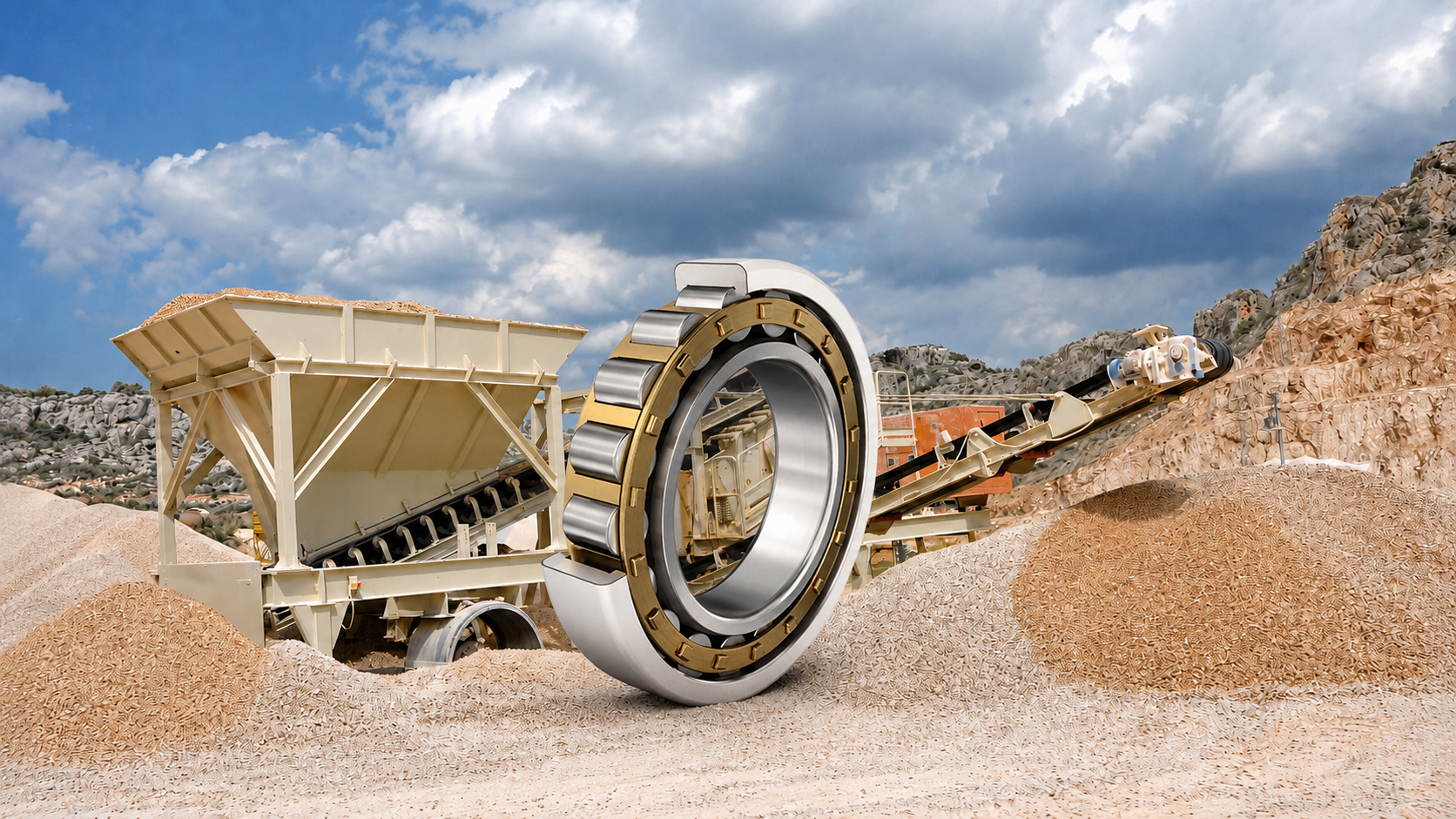
A practical cone crusher spare parts plan should cover more than the components that wear directly against rock. Bearings, bushings, seals, drive components, and mounting parts may have longer replacement intervals, but their lead times and effect on downtime can be significant.
This matters to distributors, maintenance companies, and smaller industrial buyers managing planned shutdowns or emergency repairs.
The correct approach is not to replace every internal part at once. It is to identify which items should be stocked, inspected, measured, or prepared as a replacement option before the crusher is opened.
The exact list depends on the machine model and maintenance scope. A useful classification includes:
Cone crushers compress material between a moving mantle and a fixed outer liner, while an eccentric and drive system produces the required motion. Therefore, the crushing chamber, drive train, and support system should be considered together when preparing spare parts.
A generic cone crusher parts list is only a starting point. The full model, serial information, installed design, and previous modifications determine what the machine actually requires.
Wear parts and bearings do not follow the same replacement schedule. Liners are expected to lose material during operation. Bearings normally remain in service until inspection, operating data, or damage indicates that maintenance is required.
Even so, both groups should be included in the same planning process because:
The purpose is not to purchase more parts than necessary. It is to avoid a situation in which the primary maintenance work is complete but the machine remains unavailable because a supporting component was not identified in advance.
| Component | Function in the system | Why buyers should confirm it |
| Bearings | Support radial or axial loads and rotating components | Wrong structure, fit, or clearance can affect heat and vibration |
| Bushings | Guide or support moving assemblies | Wear can change alignment and operating clearance |
| Seals | Limit contamination and retain lubricant | Damage can expose bearings and sliding surfaces to dust or moisture |
| Bearing seats | Control shaft and housing fit | Wear or deformation can prevent correct mounting |
| Retaining parts | Maintain axial position and assembly security | Incorrect dimensions can change internal positioning |
Crusher bearings work in environments with shock, dust, vibration, and heavy load. Proper lubrication, correct fit, and inspection of damage patterns remain important parts of maintenance.
These components may be physically smaller than major liners, but they can stop a repair when dimensions or references are missing. They should therefore appear in maintenance records, drawings, and critical-spare lists.
Part names alone are unreliable. Two components may both be called a thrust bearing, bushing, or seal while having different dimensions, materials, mounting features, or load functions.
Use the following matching sequence:
A brand cross-reference is useful for initial comparison, but it does not replace dimensional and structural verification. This is particularly important for crusher-specific bearings and older equipment.
For overseas buyers sourcing cone crusher spare parts from China, supplier location should not be the only selection factor. More useful checks include model confirmation, drawing review, dimensional verification, inspection scope and clear disclosure of any structural differences.
Customized supply may be appropriate when:
The process should begin with evidence, not assumptions. A complete drawing is preferred. When no drawing exists, the buyer can provide an unused sample, a damaged sample with clearly identified wear areas, or a detailed measurement report.
HSN can discuss bearing design or selection based on the model, drawing, sample, and working conditions. However, a custom or replacement option should only be confirmed after reviewing dimensions, load direction, fit, clearance, lubrication, material requirements, and installation constraints.
Send the following information in inquiry whenever possible:
HSN can first compare the model and structure, then discuss stock, sourcing, a technically confirmed replacement option, or customized production.
Key pre-shipment checks can include dimensional tolerance, hardness, and clearance. Rotational accuracy, vibration, and noise checks can also be discussed according to customer requirements.
Which crusher spare parts should be stocked?
Stock priorities may include wear parts, bearings, bushings and seals with long lead times or high downtime risk.
What are crusher replacement parts?
They are parts used to replace damaged, obsolete or unavailable components after technical confirmation.
When does a crusher bearing need customization?
Customization may be needed for obsolete references, non-standard dimensions or special internal designs.
What should a spare parts inquiry include?
Send the model, part number, photos, drawings, dimensions, quantity and required delivery time.
For detailed cone crusher bearing models not covered here, please contact HSN for model confirmation and supply discussion. For other bearing types, you can also send the complete reference, photos, dimensions, quantity and working conditions.
This article is based on independent analysis of publicly available technical information and industry understanding, and aims to provide knowledge sharing. HSN Bearing Group is an independent bearing supplier and technical service provider.
Tel: +86 156 6578 7336 Email: service@hsnindustrial.com Website: www.rollingparts.com www.hsnbearings.com