Buyers searching for cone crusher parts are rarely dealing with only one damaged component. A liner, seal, bushing, bearing, or drive component may be the visible reason for maintenance, but the surrounding parts also determine whether the crusher can return to stable operation. This is especially important in equipment exposed to heavy loads, shock, vibration, dust, and continuous duty.
For distributors and industrial buyers, a useful inquiry should identify both the required part and the surrounding system. This guide explains the main cone crusher part categories, bearing-related positions, and inquiry details.
The exact arrangement varies by crusher brand, series, and model. However, most purchasing lists can be divided into several functional groups:
In a cone crusher, material is compressed between a fixed outer liner and a moving mantle. The main shaft or cone assembly receives its motion through an eccentric and drive arrangement. Therefore, a buyer should not select a component by name alone. The machine model, mounting position, dimensions, original reference and mating parts should all be checked before ordering.
These terms overlap in daily purchasing, but they describe different buying priorities.
| Term | Main purchasing meaning | Typical examples |
| Wear parts | Components expected to lose material during normal crushing | Mantle, bowl liner, concave, protective liner |
| Spare parts | Components kept available for planned or emergency maintenance | Bearings, bushings, seals, gears, retaining parts |
| Replacement parts | Parts used to replace damaged, obsolete, or unavailable components | Standard parts, matched alternatives, or custom-made parts |
A wear part is usually replaced because its working surface has reached a defined limit. A spare part is held to reduce downtime. A replacement part may be standard, interchangeable after verification, or specially produced from a drawing or sample.
These categories are not fixed. A bearing may be a planned spare for one plant and an urgent replacement part for another, depending on maintenance policy and lead time.
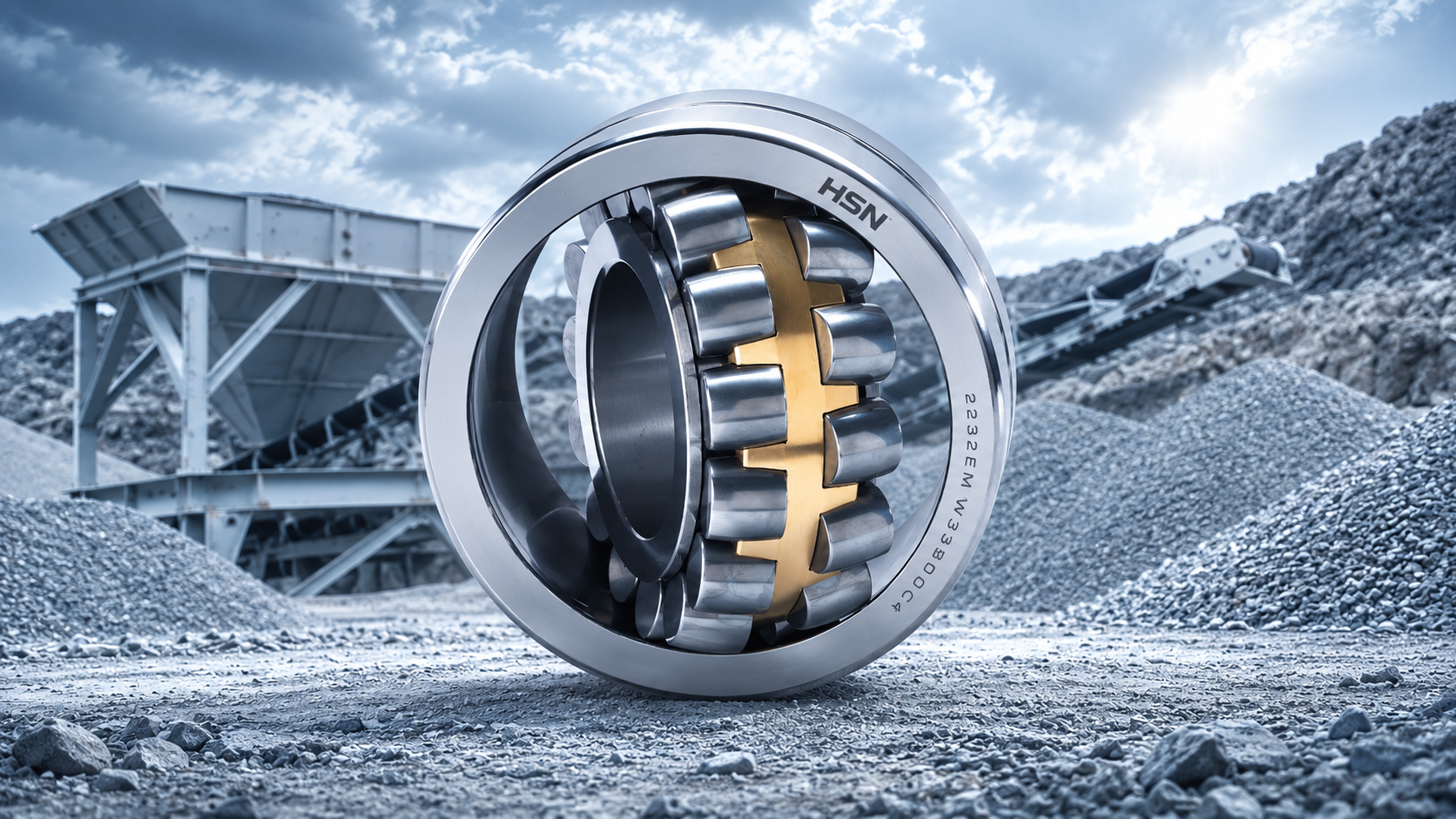
Cone crusher bearings work as part of a complete support system. Their operating condition is affected by shafts, housings, bushings, seals, lubrication, and the load path around them.
Crusher bearing performance depends not only on load capacity but also on fit, lubrication, operating temperature, contamination control, and correct mounting.
Thrust bearings support axial forces generated within the crushing and shaft system. Cone crusher arrangements may use specialized tapered or cylindrical thrust bearings, depending on the machine design. Their position, contact surfaces, lubrication method, and installed clearance must match the original arrangement.
Buyers should confirm the full reference, boundary dimensions, load direction, mating components, and any special internal design.
Drive shaft or countershaft bearings support the rotating drive system that transfers power to the crusher. Their condition affects shaft alignment, gear contact, vibration, and operating temperature.
When a drive bearing is damaged, the shaft seat, housing bore, seals, and connected gear components should also be inspected. A replacement requires model and drawing checks rather than a general cross-reference alone.
Bushings influence running clearance and alignment, while bearing seats control the shaft and housing fit. Wear, ovality, or scoring can prevent a new bearing from operating correctly.
Cone crusher designs can include upper and lower radial support positions as well as dedicated axial support. However, the exact arrangement changes by machine model.
To reduce matching errors, buyers should provide:
For bearings, include bore, outside diameter, width, clearance, internal design, and known fit requirements. A partial model number is not enough for a special crusher-specific bearing.
HSN Bearing Group supports bearing distributors and industrial end users with model confirmation, sourcing, inspection, and custom supply discussion.
The review process can include:
HSN does not treat a similar brand reference as automatic proof of interchangeability. Dimensions, internal structure, fit, lubrication, and crusher conditions must be confirmed before supply.
What cone crusher parts need regular checks?
Check wear parts, bearings, bushings, seals, shafts and lubrication parts according to the crusher model and condition.
How do buyers confirm the correct crusher part?
Provide the crusher model, part number, position, photos and dimensions. Bearing references should include all suffixes.
Should bearings be checked with wear parts?
Yes. Check bearings when vibration, heat, noise or lubricant contamination appears during maintenance.
What should a bearing inquiry include?
Send the crusher model, bearing code, photos, dimensions, quantity and working conditions.
For detailed cone crusher bearing models not covered here, please contact HSN for model confirmation and supply discussion. For other bearing types, you can also send the complete reference, photos, dimensions, quantity and working conditions.
This article is based on independent analysis of publicly available technical information and industry understanding, and aims to provide knowledge sharing. HSN Bearing Group is an independent bearing supplier and technical service provider.
Tel: +86 156 6578 7336 Email: service@hsnindustrial.com Website: www.rollingparts.com www.hsnbearings.com