An oilfield thrust bearing inquiry should identify the axial load path, not just the rig or equipment name. In a top drive or power swivel, the main thrust bearing carries axial load through the rotating shaft and housing, while radial supports and gearbox bearings serve different functions. Buyers should therefore confirm the equipment model, main-shaft assembly, and exact thrust position before discussing stock or a replacement.
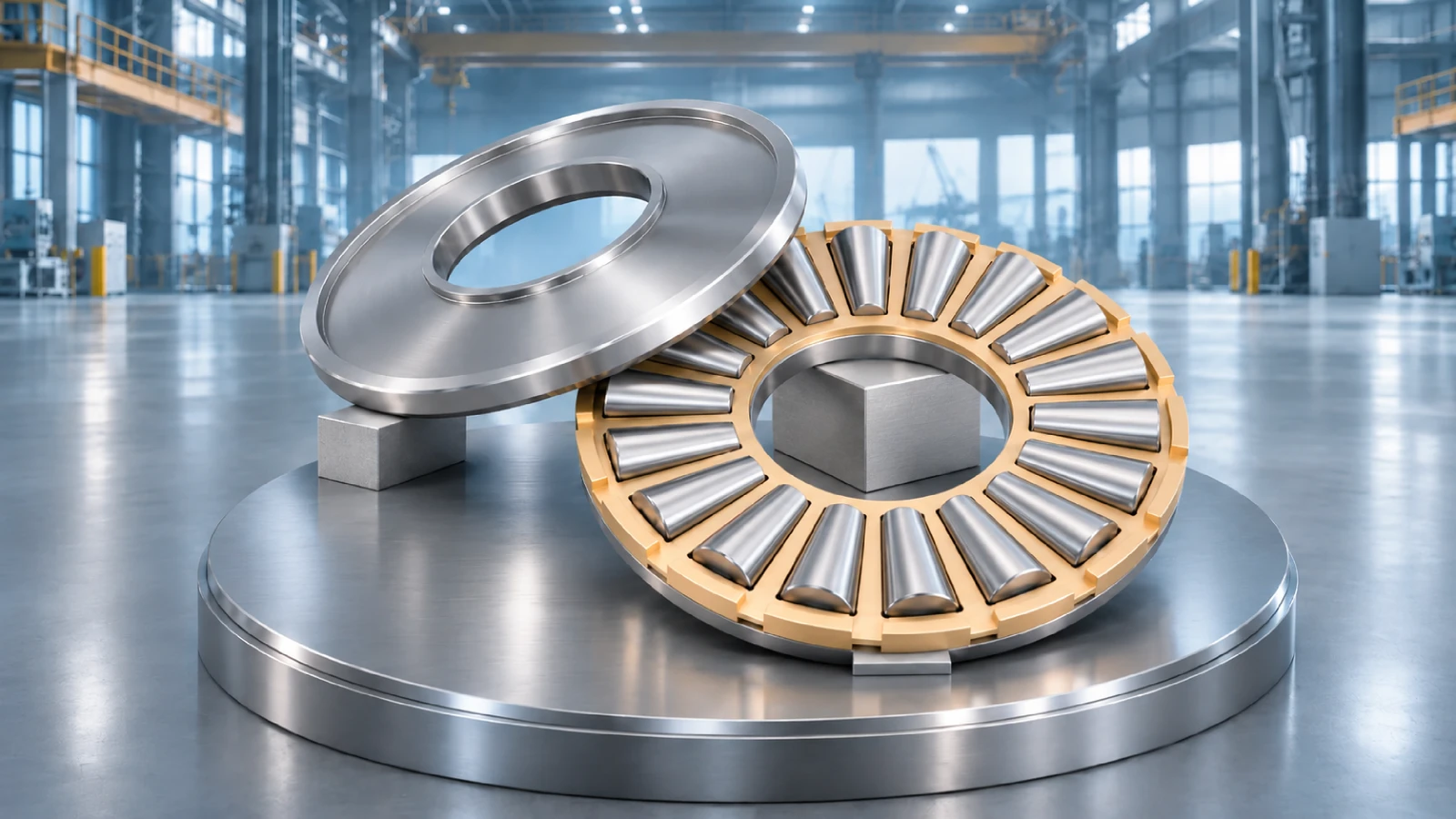
The bearing construction, lubrication system, operating duty, and repair scope also matter. A tapered roller thrust design may use separate races, rollers, and cage components, while another machine may require a different arrangement. Matching bore, outside diameter, and height does not confirm capacity, setting, or suitability. The final specification should follow the approved drawing, load requirement, lubricant route, and repair facility’s acceptance criteria.
The top drive main shaft or quill transmits torque to the drill string while its bearing system supports axial load. The main thrust bearing sits in that load path. Radial support bearings keep the shaft located across the axis, and transmission bearings support the gears. Those positions may share oil, but they cannot share a generic bearing specification.
Hoisting load changes during drilling and handling. The bearing’s contact angle, roller arrangement, stiffness and race support affect how that load is distributed. Housing deflection and shaft alignment can shift the contact pattern. For this reason, a higher-capacity claim cannot be inferred from an identical bore, outside diameter and height.
A main thrust replacement often occurs during a planned top drive overhaul. The repair facility can inspect the races, shaft and housing together. If the unit was upgraded or its duty changed, request the approved rating basis rather than assume the original bearing number still provides the required margin.
A power swivel thrust bearing search names an equipment function, not a universal bearing series. A power swivel and a top drive both rotate a suspended string, but their drive and housing layouts can differ. The buyer should first identify the maker, model and main-shaft assembly, then confirm the thrust bearing construction from that machine’s drawing.
Heavy-duty tapered thrust roller bearings are documented at many top drive main-thrust positions. Timken describes TTHD and TTHDFL designs; the latter includes a flat race in its particular configuration. Both are separable designs, but their race geometry and cage choices are not interchangeable by name. A power swivel may use a different specified arrangement, so do not assign those product families without the actual design.
| Design question | What to record | Why it changes the quote |
| Equipment | Power swivel or top drive model | Housing and load path differ |
| Thrust construction | Complete code, races, rollers and cage | Envelope alone is insufficient |
| Mounting | Shaft and housing seats, retainer details | Controls support and setting |
The product class should be defined before discussing industry applications. A thrust ball bearing, tapered thrust roller bearing and a complete main-shaft assembly are different order items.
Many top drives circulate filtered oil through the main shaft and transmission housing. Some special designs use grease at a main-shaft position. The equipment maker’s system determines oil grade, flow and service interval. A bearing designed for an oil-fed housing should not be quoted as a grease-ready substitute because its dimensions match.
Drilling fluid should remain in its intended path through the main shaft. Washpipe and housing seals help keep mud, water and grit from the bearing cavity. A failed seal can create abrasive dents, while poor filtration leaves wear debris circulating through the races. Investigate both conditions before returning a new bearing to service.
Load and speed must be evaluated together. The main thrust position can see moderate rotation under substantial axial load, with transient conditions during operations. Record the machine’s rated load, expected duty and any revised hoisting requirement. A manufacturer-specific capacity evaluation may be needed if the bearing design or machine rating changes.
Spalling, smearing, overheating or debris marks warrant a teardown review. These conditions do not, alone, identify whether the source was oil starvation, contamination, misalignment or overload. The repair team should check the oil route, filters, seals, shaft seat, housing support and race contact pattern. A roughened race may be the result of a wider system fault.
Because a tapered thrust arrangement can have separate washers and cage components, confirm the complete replacement scope. Mixing a new race with unapproved worn components can change contact geometry. Record any shim or setting method and obtain the repair facility’s measurements before a parts order is finalized.

Provide the top drive or power swivel maker, model, serial number and main-shaft assembly code. Include the complete bearing designation, race and cage details, drawings, dimensions, quantity, load and speed duty, lubricant route, photographs and inspection findings. State whether the repair facility needs a loose bearing or a matched set of components.
For a U.S. drilling contractor scheduling an overhaul, list the parts receipt date, assembly window and person who approves a proposed design. Ask for the inspection documents the facility actually needs: dimensions, material requirements and any agreed test or traceability record. These details let procurement compare supply options without claiming an unverified interchange.
HSN can review a full model, drawing or sound sample for stock or a custom technical discussion. The qualified repair facility must confirm setting, oil delivery, assembly fit and machine rating before returning the drive to service.
Is a thrust bearing the same as radial support?
No. Confirm the main thrust position and distinguish it from upper and lower radial bearings.
Can U.S. buyers expedite a thrust bearing replacement?
Yes, but confirm the exact position, drawing, repair scope, and approval route before releasing an urgent order.
Can TTHD and TTHDFL be swapped by dimensions?
No. Their race and cage designs require a machine-specific engineering review.
Why ask HSN to quote a thrust bearing?
HSN can review the drawing and race-and-cage scope, then confirm agreed inspection records and a quoted lead time.
For detailed oilfield thrust bearing models not listed above, please contact HSN for model confirmation and supply discussion. When checking other bearing references, you can also send the complete model, photos, dimensions, quantity, application, and working conditions.
This article is based on independent analysis of publicly available technical information and industry understanding for knowledge sharing. All brand names and trademarks mentioned belong to their respective owners. HSN Bearing Group is an independent bearing supplier and technical service provider.
Tel: +86 156 6578 7336 Email: service@hsnindustrial.com Website: www.rollingparts.com www.hsnbearings.com