
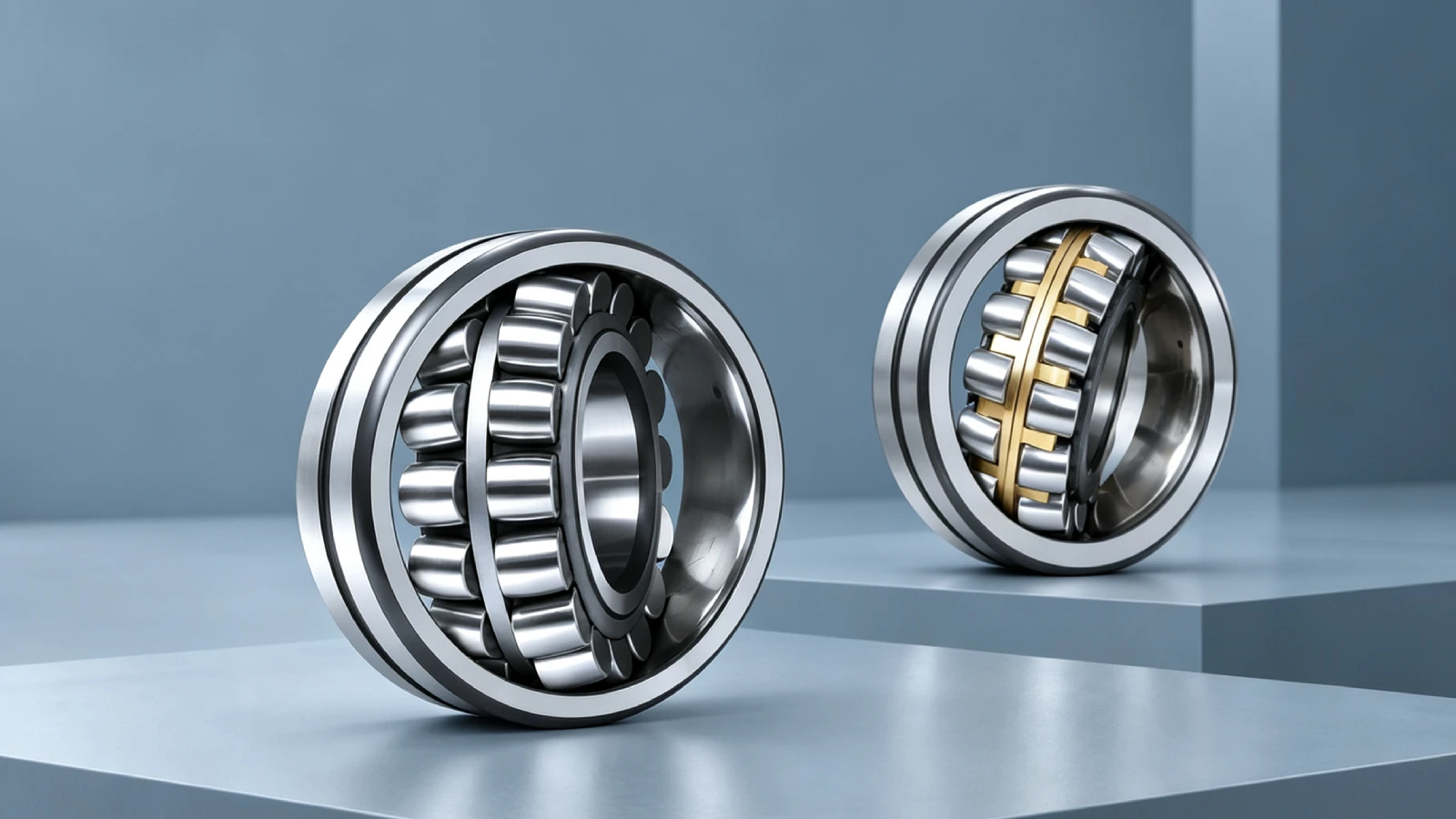
A cross reference for bearings can help purchasing teams identify possible shaker-screen models across several brands. However, it is only a starting point. Vibrating equipment applies repeated acceleration, heavy radial force, shock, contamination, and heat. A bearing with matching boundary dimensions may still have the wrong internal clearance, cage, lubrication features, or application-specific execution.
Buyers should therefore connect every cross-reference result to the actual screen design and operating duty. The complete designation, not the basic bearing number alone, is essential for a technical review.
A shaker screen uses an eccentric shaft or another unbalanced mechanism to generate controlled vibration. This motion creates continuously changing forces in the bearings. Load direction, amplitude, acceleration, starting conditions, material buildup, and structural resonance can all influence the actual stress.
Spherical roller bearings suit many screen arrangements because they support high radial loads and can accommodate limited misalignment. Nevertheless, a standard industrial version is not automatically suitable. Screen duty may require an application-specific cage, increased radial internal clearance, lubrication grooves and holes, or internal geometry designed for vibration.
The surrounding structure matters as well. Shaft deflection, housing distortion, fit, and thermal expansion affect operating clearance. Grease selection and relubrication intervals must account for speed, temperature, vibration, contamination, and purge requirements. For these reasons, buyers should identify both the bearing and the complete working environment before comparing brands.
The table below provides representative references for common 23- and 33-series shaker-screen bearings. Use it only for initial model identification. Buyers must still confirm current manufacturer data, complete suffixes, dimensions, ratings, internal features, and application approval.
| Bore | Timken | FAG | SKF | NSK | NTN |
|---|---|---|---|---|---|
| 40 mm | 22308EMW33W800C4 | 22308-E1-T41A | 22308E/VA405 | 22308HE4C4U15-VS | 22308EF800 |
| 60 mm | 22312EMW33W800C4 | 22312-E1-T41A | 22312E/VA405 | 22312CAME4C4U15-VS | 22312EF800 |
| 80 mm | 22316EMW33W800C4 | 22316-E1-T41D | 22316EJA/VA405 | 22316CAME4C4U15-VS | 22316EF800 |
| 120 mm | 22324EMW33W800C4 | 22324-E1-T41D | 22324CCJA/W33VA405 | 22324CAME4C4U15-VS | 22324UAVS2 |
| 110 mm | 23322EMW33W800C4 | 23322-AS-MA-T41A | 453322EJA/VA405 | 23322CAME4C4U15-VS | 23322VS2 |
| 160 mm | 23332EMBW33W800C4 | 23332-A-MA-T41A | 453332CCJA/W33VA405 | 23332CAME4C4U15-VS | 23332VS2 |
The first four rows show 23-series references, while the final two rows belongs to the 33 series. This difference explains why the table does not sort every row by bore alone. It also shows why bore size cannot identify the complete bearing series.
Each manufacturer uses its own suffix system. Codes such as W800C4, T41A, T41D, VA405, U15-VS, EF800, and VS2 identify brand-specific designs or options. Do not translate these codes character by character between brands. Removing a suffix may change a shaker-screen execution into a bearing with different internal features.
First, record the bore, outside diameter, width, corner dimensions, and shoulder requirements. These dimensions determine whether the bearing fits the shaft and housing. Next, confirm the bore form, adapter or withdrawal sleeve requirements, and the specified shaft and housing fits.
Then compare the internal specification:
| Check | Why it matters in screen duty |
| Radial internal clearance | Fit and heat reduce clearance during operation; the wrong class can raise heat or looseness |
| Cage design and material | Vibration and acceleration place repeated forces on the cage and rollers |
| Roller and raceway design | Internal geometry affects load distribution, friction, and dynamic rating |
| Lubrication features | Groove and hole arrangements influence grease distribution and relubrication |
| Dynamic and static ratings | Equal dimensions do not guarantee equal capacity or calculated life |
| Speed and temperature limits | Cage, clearance, lubricant, and fit must suit the actual operating range |
Finally, verify the seal arrangement, dimensional stabilization, precision requirements, and any special manufacturing code. If the screen manufacturer specifies a drawing or approved bearing execution, follow that requirement instead of relying on a general cross-reference list.
Cross-reference tables usually align products by size, series, or intended application. However, they do not prove that every internal feature is identical. Manufacturers may use different roller profiles, cage guidance, surface finishes, heat treatments, clearance tolerances, load ratings, or speed limits.
For example, two bearings may share the same bore and outside diameter but use different cage materials, roller guidance methods, lubrication grooves, or internal clearances. These differences can affect heat generation, grease distribution, roller stability, and operating clearance under vibration. Therefore, buyers should compare the complete internal execution rather than treat matching boundary dimensions as proof of interchangeability.
Catalog and product revisions create another risk. A manufacturer may update a model, replace it, or limit it to certain markets. Moreover, a similar base number may have several suffix combinations for clearance, bore form, cage, or lubrication. Buyers should preserve the complete original designation and request current technical data for the proposed model.
Finally, consider the machine condition. A bearing that performs well in one screen may not suit another screen with a different stroke, speed, deck mass, shaft arrangement, or lubrication practice. Consequently, a technical comparison should cover both bearing data and machine duty before ordering.
Provide the clearest available identification and operating information:
HSN can compare the original reference with drawings, dimensions, samples, and operating conditions. A pre-shipment plan may include dimensional tolerance, hardness, and internal-clearance checks. Material, accuracy, vibration, noise, or flaw-detection checks can also be agreed when they suit the product and order requirements. Any proposed alternative remains subject to technical confirmation for the specific screen.
Can a Base Number Confirm a Shaker-Screen Bearing?
No. The full suffix may define clearance, cage, bore, lubrication features or a screen-specific execution.
Does Matching Size Prove Bearing Interchangeability?
No. Compare internal design, ratings, clearance, cage, speed limits, lubrication and machine duty.
Why Is Internal Clearance Important on a Screen?
Fit, heat and vibration affect operating clearance. The wrong class can increase temperature, stress or looseness.
What Should a Cross-Reference Inquiry Include?
Send the full model, photos, dimensions, speed, stroke, loads, fits, lubrication, temperature and quantity.
For detailed shaker-screen bearing models not listed above, please contact HSN for model confirmation and supply discussion. For other bearing types, send the complete model, photos, dimensions, quantity, application, and working conditions.
This article is based on independent analysis of publicly available technical information and industry understanding and is intended for knowledge sharing. All brand names and trademarks belong to their respective owners. HSN Bearing Group is an independent bearing supplier and technical service provider.
Tel: +86 156 6578 7336 Email: service@hsnindustrial.com Website: www.rollingparts.com www.hsnbearings.com